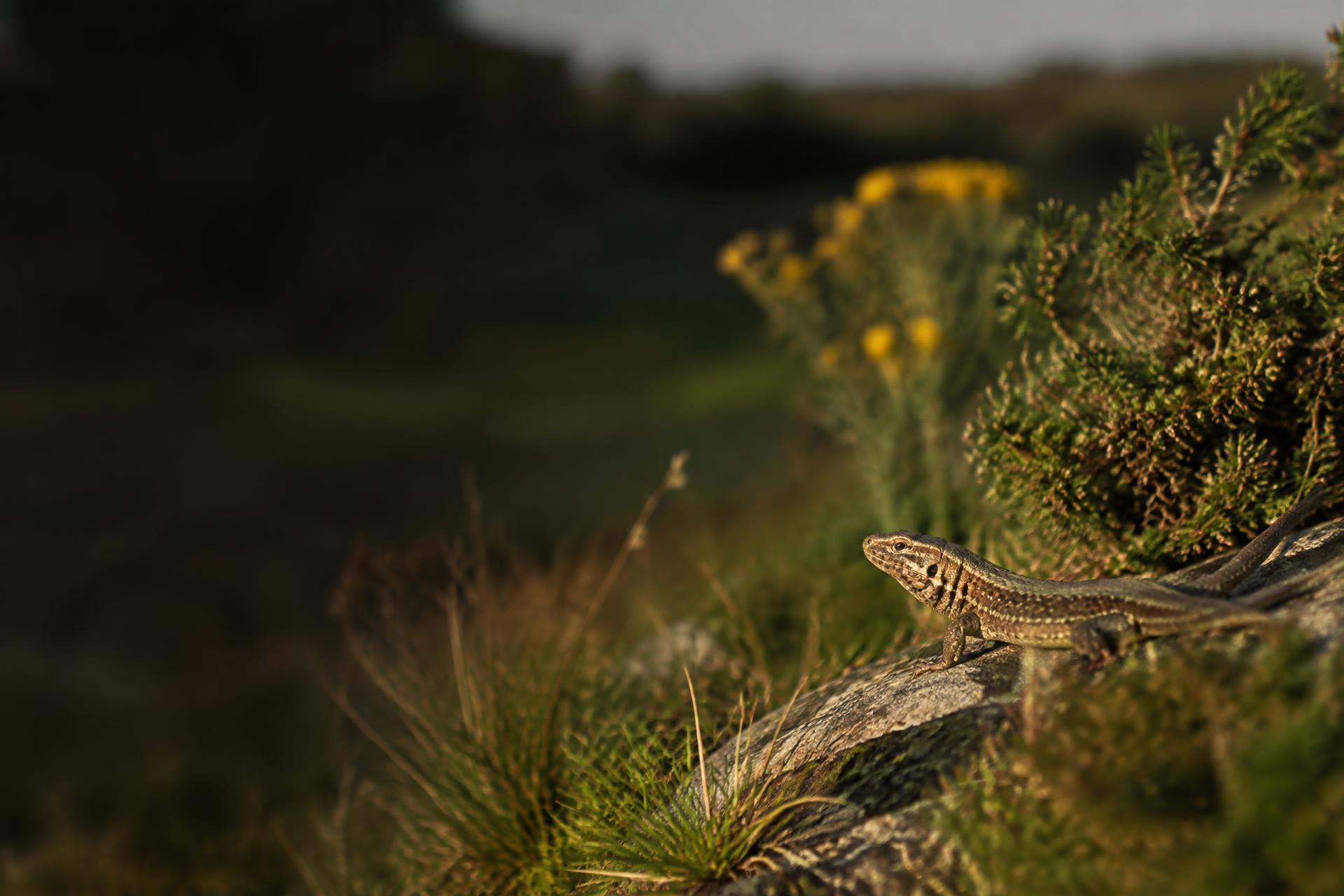
Understand what’s using your site before work begins.
Practical reptile assessment, survey and mitigation advice for development projects.
- Habitat-led assessment
- Proportionate survey design
- Practical mitigation
- Construction-stage advice
Habitat is a clue, not a conclusion.
Reptiles can use varied habitats that provide shelter, warmth, feeding opportunities and connections across a site. Grassland, scrub, banks, edges and habitat mosaics can sometimes be relevant.
Habitat type alone does not determine a survey requirement. The proposed works, site context and evidence should be considered together.

A practical route through the evidence.
The scope should match the site and project rather than assume reptiles are present.
- 01
Review
Understand proposed works, habitat and wider connections.
- 02
Assess
Consider whether reptile presence could be relevant to the project.
- 03
Survey if appropriate
Use suitable survey methods and conditions where evidence is needed.
- 04
Plan
Develop proportionate avoidance or mitigation based on findings.
- 05
Deliver
Support site preparation or works where ecological measures are required.
What could the work involve?
Each stage should answer a clear project question.
Habitat assessment
Review vegetation structure, edges, refuges, basking opportunities and connectivity.
Refugia survey
Where appropriate, survey refuges can help build evidence under suitable conditions.
Impact review
Consider how clearance, earthworks or construction could interact with suitable habitat.
Mitigation strategy
Measures may involve timing, habitat management, sensitive methods or relocation where appropriate.
Site support
Briefing or ecological supervision may be useful for particular activities.
Enhancement
Retained and new habitat can be designed to provide shelter and connectivity.
Timing needs context.
Some fieldwork can be seasonally or weather constrained. Early advice helps establish what evidence is meaningful and when it may be gathered.
Indicative only. These periods are an editable planning aid only. Suitable timing depends on the method, species ecology, site circumstances, weather, current guidance and the question being addressed. A suitably qualified ecologist should verify the programme.
Plan the work around the evidence.
Reptile presence does not lead to one universal response. The species, numbers, habitat, scale of effects and wider project all influence what may be appropriate.
Early advice creates more scope to retain habitat, phase work sensibly and coordinate mitigation with the construction programme.
- Avoid valuable areas
- Phase habitat change
- Use sensitive working methods
- Create connected habitat
What you need to plan for.
How could this affect the project?
Potential effects depend on where works overlap suitable or used habitat. Recommendations should be proportionate to the evidence.
When should I contact you?
Before vegetation clearance or site preparation is programmed, particularly if survey evidence may be needed.
What might it cost?
Tell us about your project and we’ll provide a clear proposal for the work we believe is appropriate.
Not sure whether your site’s habitat could make reptiles relevant?
Tell us about your site and we’ll highlight some of the ecological considerations worth thinking about.
Clear answers about reptile surveys.
See the wider ecological picture.
Make ecology part of the plan.
Tell us about the site and we’ll help identify an appropriate next step.