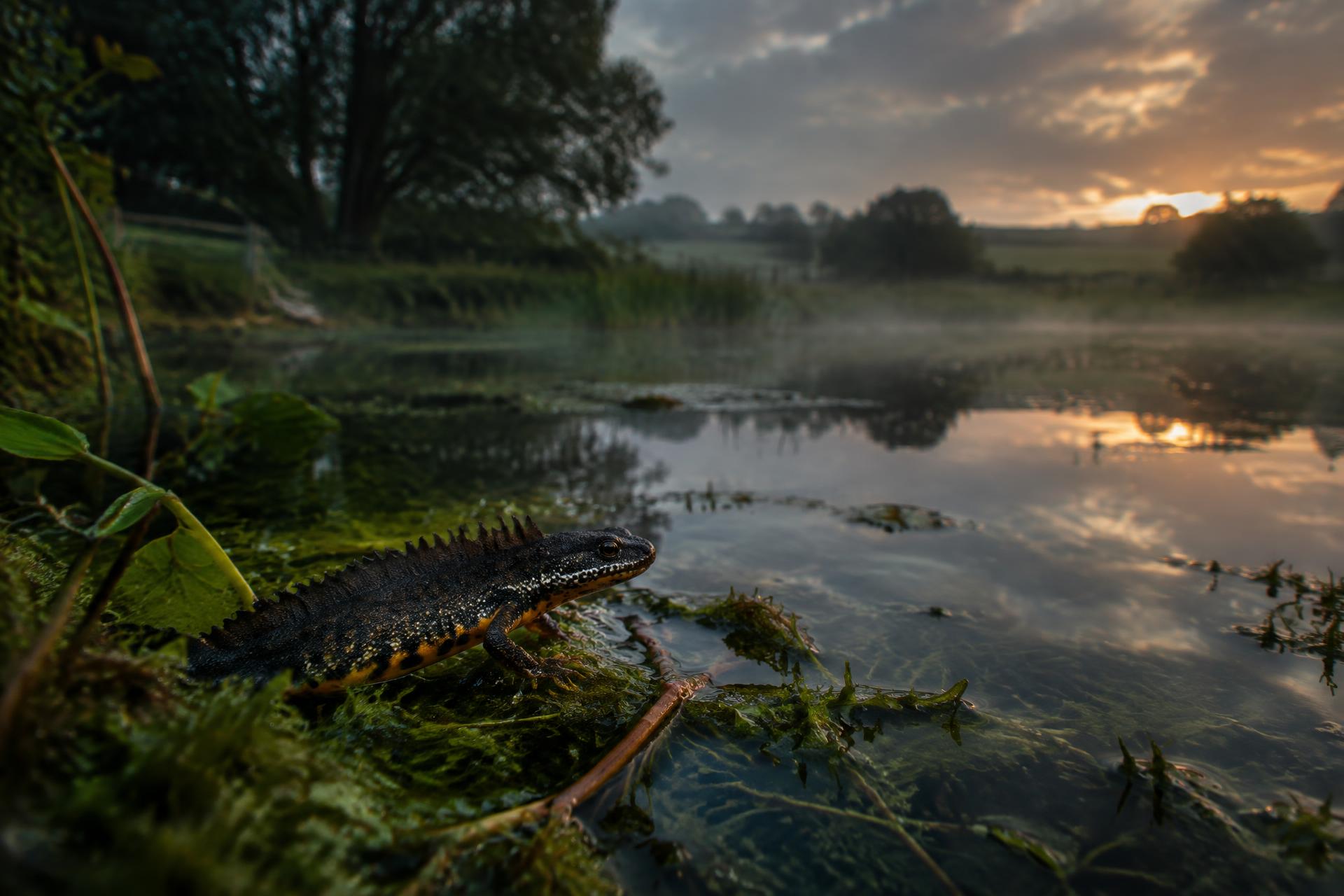
Got a pond nearby? Let’s work out what matters.
Clear advice on great crested newts, surveys, licensing and practical next steps.
- Pond and habitat context
- Proportionate survey advice
- Planning support
- Licensing guidance where relevant
A pond nearby doesn’t automatically mean a problem.
Great crested newts use ponds for breeding and can spend time in surrounding terrestrial habitats. A pond does not have to sit within the red-line boundary to be relevant.
The site, proposed works, pond network, connecting habitat and available evidence all matter. Professional assessment helps identify a proportionate next step.
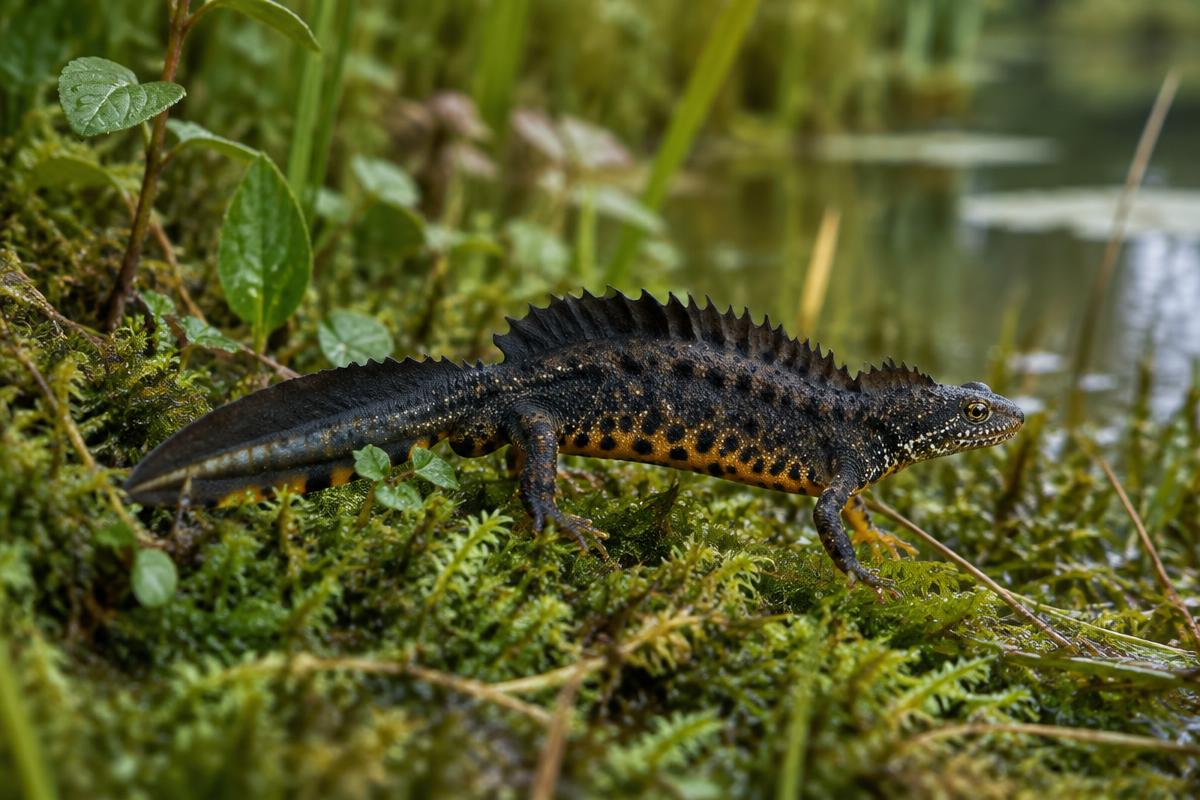
Follow the evidence.
Not every project follows every stage. Each decision should respond to what is known about the site and ponds around it.
- 01
Understand
Review the works, location, nearby ponds and surrounding habitat.
- 02
Assess
Consider pond suitability, terrestrial habitat and connectivity where relevant.
- 03
Survey if appropriate
Use a suitable method only where further evidence is justified.
- 04
Interpret
Explain what the evidence means for design, planning and programme.
- 05
Support
Develop mitigation or licensing advice where circumstances require it.
What might be involved?
The appropriate route depends on the ecological question, access and current guidance.
Habitat review
A look at ponds, terrestrial habitat, barriers and links across the wider landscape.
Pond assessment
An initial appraisal of pond characteristics and context where this will inform the next step.
Presence evidence
Further survey may be appropriate where the evidence and proposed works justify it.
Impact advice
Clear explanation of how the project could interact with suitable habitat or known newt use.
Mitigation
Practical measures shaped to the project and evidence rather than a generic package.
Licensing support
Advice where licensing may be relevant, based on the particular circumstances.
Timing needs context.
Some fieldwork can be seasonally or weather constrained. Early advice helps establish what evidence is meaningful and when it may be gathered.
Indicative only. These periods are an editable planning aid only. Suitable timing depends on the method, species ecology, site circumstances, weather, current guidance and the question being addressed. A suitably qualified ecologist should verify the programme.
Understand first. Respond appropriately.
Evidence of great crested newts does not by itself tell you the outcome for a project. The location and nature of works, habitats affected and survey evidence need to be considered together.
Possible responses can include avoiding effects, changing methods or timing, habitat measures and licensing where applicable.
- Review design and working methods
- Protect relevant habitat
- Plan proportionate mitigation
- Consider licensing where applicable
What you need to plan for.
What does this mean for planning?
Where newts or suitable habitat may be affected, ecological information can be relevant to planning. The required evidence depends on the project and circumstances.
When should I contact you?
Early contact gives more time to review pond access, seasonal constraints and design options.
What might it cost?
Tell us about your project and we’ll provide a clear proposal for the work we believe is appropriate.
Not sure whether a pond or nearby habitat could be relevant?
Tell us about your site and we’ll highlight some of the ecological considerations worth thinking about.
Clear answers about great crested newt surveys.
See the wider ecological picture.
Make ecology part of the plan.
Tell us about the site and we’ll help identify an appropriate next step.