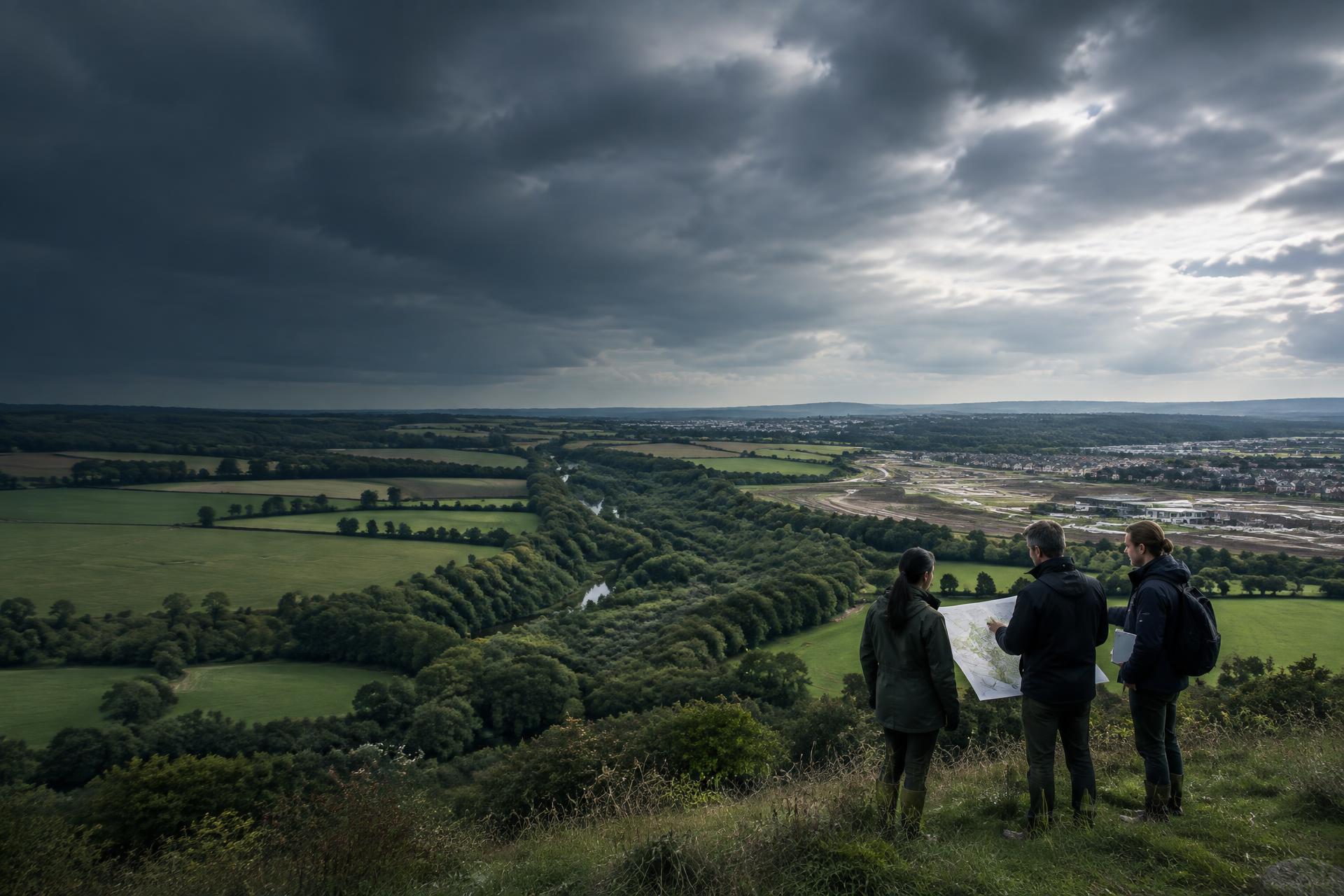
Clear evidence for complex projects.
Robust ecological assessment that helps project teams understand effects, mitigation and opportunities for enhancement.
- Robust evidence
- Clear evaluation
- Coordinated mitigation
- Professional reporting
Make complex ecology understandable.
An Ecological Impact Assessment, or EcIA, brings ecological evidence together to identify and evaluate likely effects of a proposal. It explains how effects can be avoided, reduced or addressed and where enhancement can be built in.
It may be appropriate for larger or more complex projects where a structured account of ecological effects is needed. The scope should remain proportionate to the site, proposal and planning context.
Evidence that supports decisions.
A transparent method helps the whole team understand how ecological conclusions have been reached.
- 01
Understand
Define the project, ecological context, study area and information needs.
- 02
Assess
Bring together habitat, species and wider ecological evidence.
- 03
Evaluate
Consider the importance of ecological features and the likely effects of the proposal.
- 04
Mitigate
Apply the mitigation hierarchy and develop practical responses with the design team.
- 05
Enhance
Identify meaningful opportunities that align with the project and landscape.
- 06
Report
Present methods, evidence, limitations, effects and commitments clearly.
What feeds into an EcIA?
The evidence base is assembled around the project rather than copied from a standard list.
Baseline studies
Habitat and species information appropriate to the site and likely effects.
Design information
Layouts, construction approach, phasing, landscape and operational details.
Ecological importance
A reasoned understanding of which ecological features matter and at what scale.
Impact pathways
A clear link between project activities and possible ecological change.
Mitigation commitments
Measures to avoid, reduce or address likely effects, developed with the wider team.
Enhancement
Opportunities to strengthen ecological function and project outcomes.
A professional document—and a collaborative process.
The strongest EcIA work is developed alongside design, planning and environmental decisions rather than written after them.
We communicate assumptions, limitations and recommendations clearly so the team can test options and carry commitments into delivery.
- Developers
- Architects
- Planning consultants
- Landscape architects
- Other professional consultants
What you need to plan for.
When might an EcIA be appropriate?
This depends on the scale, sensitivity, likely effects and planning context. An early review can help define a proportionate scope.
How long could it take?
The programme depends on baseline evidence, survey needs, design development, consultation and project complexity.
What might it cost?
Tell us about your project and we’ll provide a clear proposal for the work we believe is appropriate.
Clear answers about ecological impact assessment.
See the wider ecological picture.
Make ecology part of the plan.
Tell us about the site and we’ll help identify an appropriate next step.